The Learning and Discovery Lab at the Hasso Plattner d-school Afrika at the University of Cape Town is exploring the evolution of design thinking with a distinctly African perspective. One way of doing this is through a series of conversations called the Design Dialogues, a ‘deep dive’ into Design Thinking with an African perspective. However, before we discuss the Dialogues, we need to put them into perspective within the field of design thinking more broadly.
Design thinking: a practice in transition
Design Thinking has emerged as a useful framework for tackling complex challenges in both societal and business contexts. Its focus on human-centred solutions, iterative prototyping, and trans-disciplinary collaboration has made it an important tool for innovation and creative problem-solving. Locally, on the African continent, and internationally, Design Thinking has been adopted across various sectors, from healthcare and education to corporate innovation and social enterprises. This methodology, emphasising empathy, experimentation, and collaboration, can create innovative, user-centred solutions with a key focus on fostering ‘design-led’ mindsets that can enable the development of human-centred solutions.
However, despite its widespread adoption, Design Thinking has faced criticism for relying heavily on techniques and models developed in the global North. These methodologies, often shaped by Western contexts and perspectives, may not always be suitable or effective when applied to different cultural and socio-economic environments. Critics argue that this reliance can lead to culturally insensitive solutions, perpetuate power imbalances, and overlook local knowledge and practices. As a result, there is a growing call for a more inclusive and contextually adapted approach to Design Thinking; an approach that incorporates diverse perspectives and is sensitive to the unique challenges and opportunities present in different regions and for us, particularly on the African continent.
What is Africa’s role in opening up the design thinking practice?
It is important to acknowledge the practices that have shaped the evolution of Design Thinking, both internationally and how these practices have found their way onto the African continent. The shape that the practice has taken in the majority of places has its roots in the mid-20th century, with organisations like
IDEO popularising its methodologies, and universities like
Stanford in the USA and
Potsdam in Germany opening up schools of design thinking, albeit each with a slightly different focus.
However, no practices are static – they shift and change in line with dynamic contexts and trends. Design Thinking is no different. Over the decades, it has evolved from a niche practice within design firms to a widely recognised creative problem-solving approach used by corporations, non-profits, governments and higher education institutions to drive innovation. Milestones include the integration of design thinking into educational curricula, the establishment of innovation labs, and the proliferation of design-led startups.
In Africa, design thinking’s journey has been equally dynamic and is framed by the contexts in which the practice has developed.
M-Pesa in Kenya is one such example, revolutionising mobile banking by focusing on the needs of unbanked populations. Initiatives like the
Living Goods program in East Africa demonstrated how design thinking can improve healthcare delivery by tailoring solutions to local contexts. However, important to note too is that several scholars on the continent, e.g., Mugendi M’rithaa and Amollo Ambole, argue that design and design thinking has a long history on the continent.
Because of context and culture, innovation in design and design-led thinking is endemic in many countries in Africa. However it is often the case that Design Thinking practice is ‘lost in translation’ given the use of a wide range of languages and terminology used to describe it. In addition, much of the Design Thinking practice on the continent may not be visible in more traditional media sources, rendering it invisible to a wider global audience.
Reflecting the need to make knowledge on the continent more visible, the
Afrikan Collaboration Network for Design Thinking – an important project of the d-school Afrika – is taking a bold and important step in uniting institutions focused on design thinking within an African context. The community of practice being developed across a wide range of contexts and institutions enables the sharing of ideas and resources to build local capacity and to contribute leadership and innovation from a Global South perspective.
These examples underscore how design thinking is being contextualised, making its tools and techniques accessible to a broader audience beyond traditional designers. This shifting of practice is critical as it provides the opportunity for individuals and communities to showcase their creative problem-solving, thereby fostering innovation from the grassroots level.
However, as design thinking becomes more widespread, there is a pressing need for a purposeful and inward reflection on the practice. This includes the tools and processes, including the development of relevant mindsets, in the development of responses to grand challenges. Such reflection helps to ensure that design thinking maintains its authenticity and effectiveness, avoiding superficial applications that fail to address deeper issues of power, relevance, inclusivity and equity. By critically examining the methods and principles of design thinking, practitioners can adapt them to be more inclusive and contextually relevant.
Learning and Discovery Lab: Building communities of practice and opportunities for reflexive praxis
The d-school Afrika is contributing to these discussions in an active and intentional way. This is one of the main reasons behind the establishment of initiatives like the
Learning and Discovery Lab. The Lab is dedicated to exploring the ‘why’ of design thinking, ensuring that its application is socially responsive and ethically grounded. By engaging in critical inquiry and research, combined with practical experimentation, the Lab aims to develop a deeper understanding of how design thinking can be adapted to meet local needs effectively, always aimed at developing practices that are relevant, inclusive, and equitable.
The Lab’s work also emphasises the importance of interrogating both the principles and outputs of design thinking from an African vantage point. This involves questioning how well the methodologies align with local values and needs, and ensuring that the solutions developed are sustainable and impactful. By fostering a culture of critical reflection and continuous improvement, the Lab aims to advance the discipline of design thinking in a way that is both contextually relevant and globally informed.
Design Dialogues: ‘deep dives’ into Design Thinking
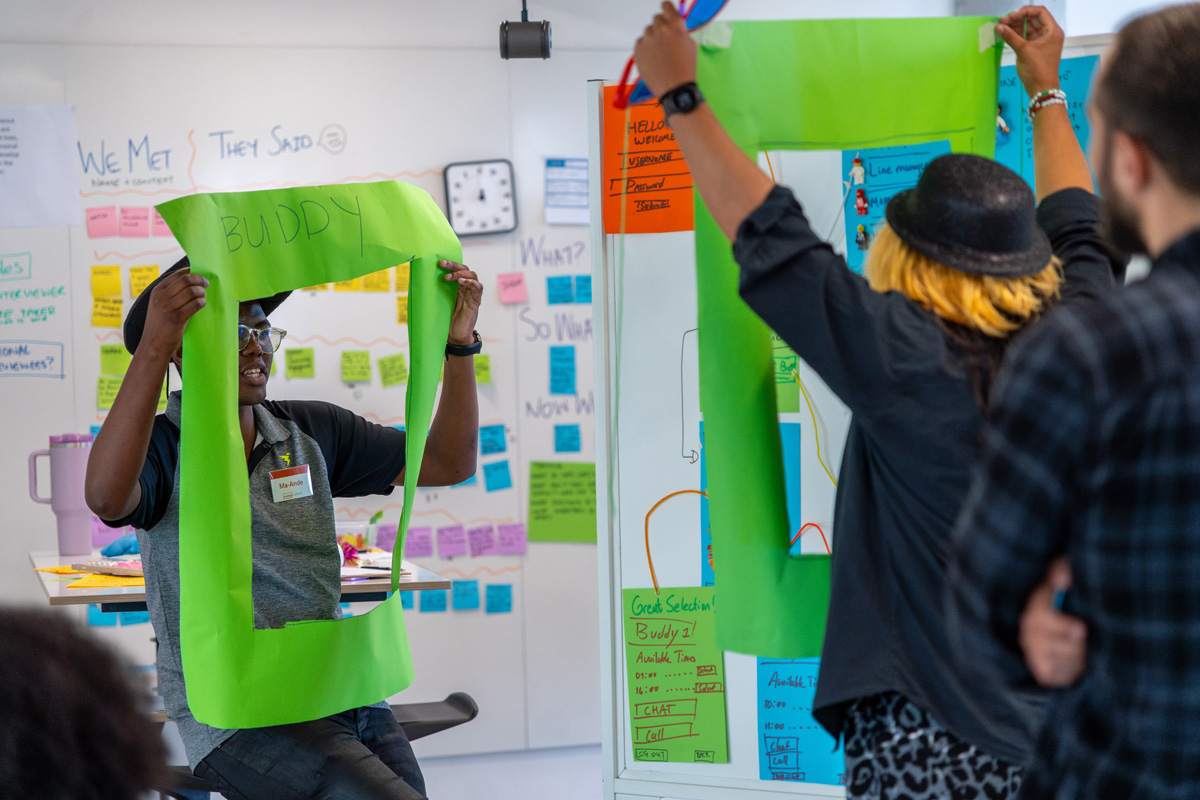
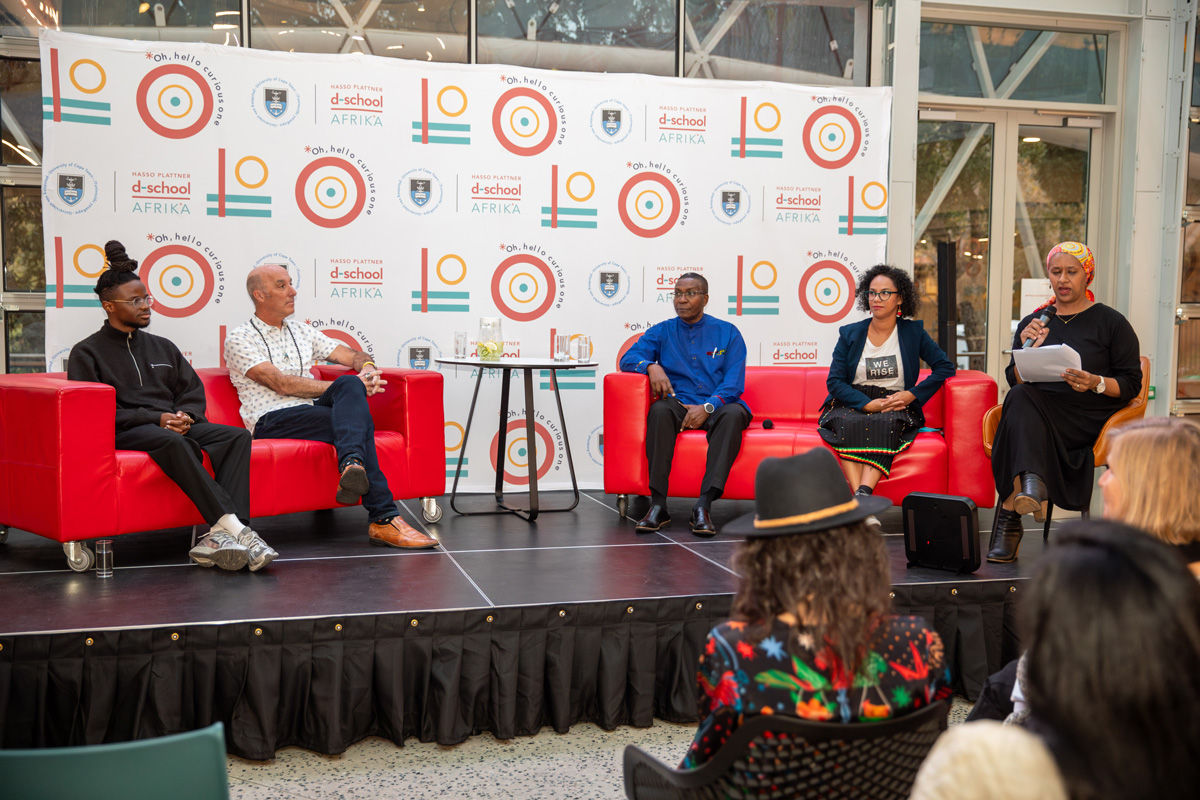
One such initiative aimed at achieving a shift in practice are the Design Dialogues initiated through the Lab. These Dialogues are aimed at providing opportunities for ‘deep dives’ into design thinking and through this more critical lens, exploring ways to broaden the inquiry into design-led thinking from a distinctly African perspective.
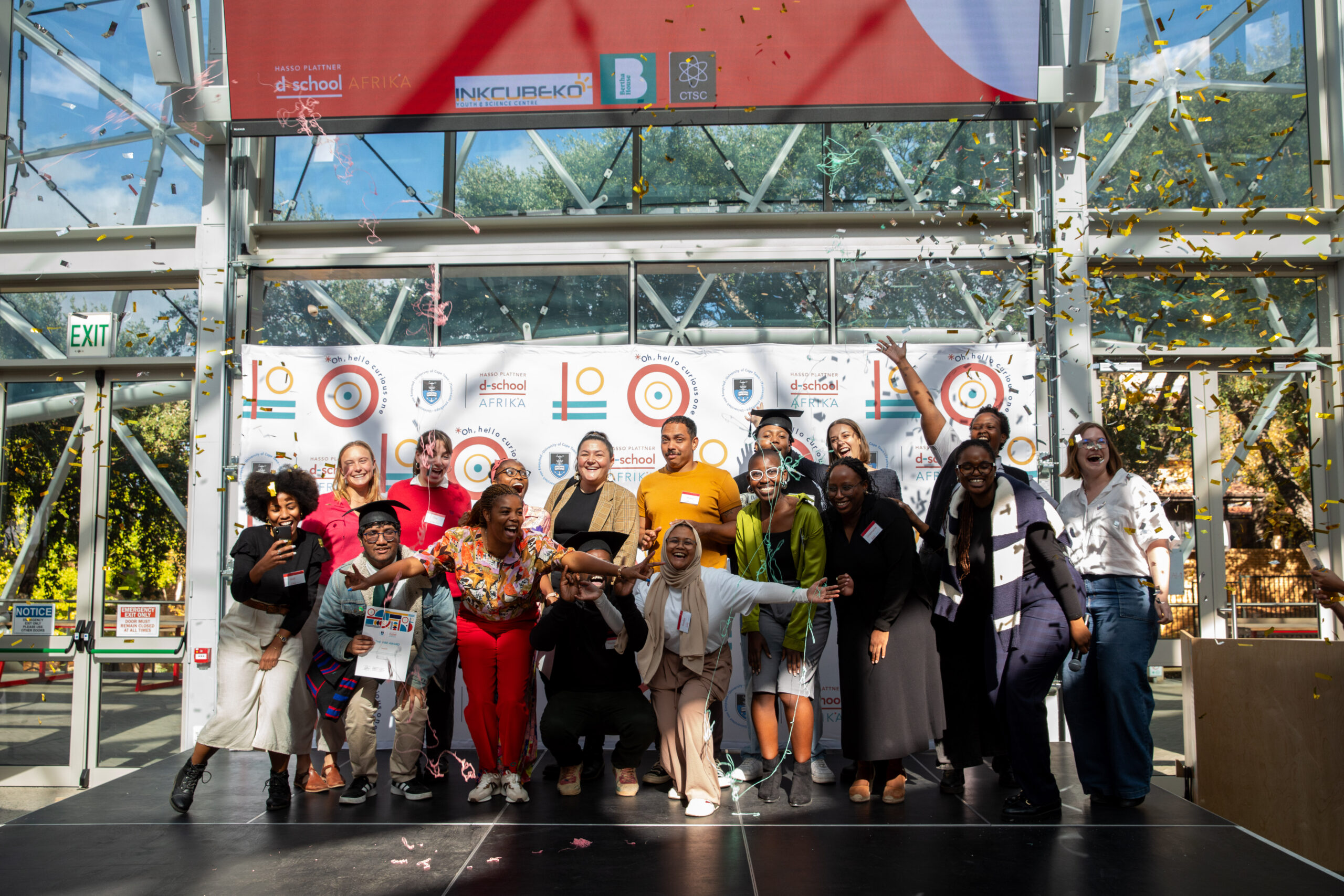
The Dialogues bring together practitioners, scholars, and community members to explore how design thinking can be adapted and applied to address local challenges effectively. By fostering a space for critical reflection and inclusive dialogue, the d-school Afrika is helping to ensure that design thinking methodologies and practices are relevant and impactful within the African context. The first Dialogue was held in April at the d-school Afrika, and attended by a diverse audience of around 80 people including students, design thinking professionals, and project partners.
Watch the first Design Dialogues session here
The Design Dialogues are thus a critical component of this effort, serving as a platform for inclusive and reflective discussions about the application of Design Thinking in diverse contexts. These dialogues encourage engagement from the broader African network, providing opportunities for practitioners to share insights, challenge assumptions, and co-create new approaches to complex challenges.
Looking ahead, the upcoming Design Dialogues promise to further these discussions, offering rich insights and fostering deeper connections within the design thinking community. The next event in mid-August will be designed and delivered in partnership with the Afrikan Collaboration Network for Design Thinking, and will provide an opportunity to re-imagine some of the elements of design thinking practice in context.
By continuing to engage with diverse voices and perspectives, the d-school Afrika at UCT aims to advance the practice of design thinking in ways that are innovative, inclusive, and impactful. We encourage practitioners and scholars from across the continent to join these dialogues and contribute to the ongoing evolution of design thinking.